
An international study led by researchers from Biogipuzkoa Health Research Institute and the University of the Basque Country (EHU) has identified MARCO receptor as a new therapeutic target in intrahepatic cholangiocarcinoma (iCCA), one of the most aggressive forms of liver cancer and one with the poorest prognosis. CCA is a cancer of the bile ducts that often presents with non-specific symptoms in its early stages and is therefore frequently diagnosed at an advanced stage, making treatment particularly challenging.
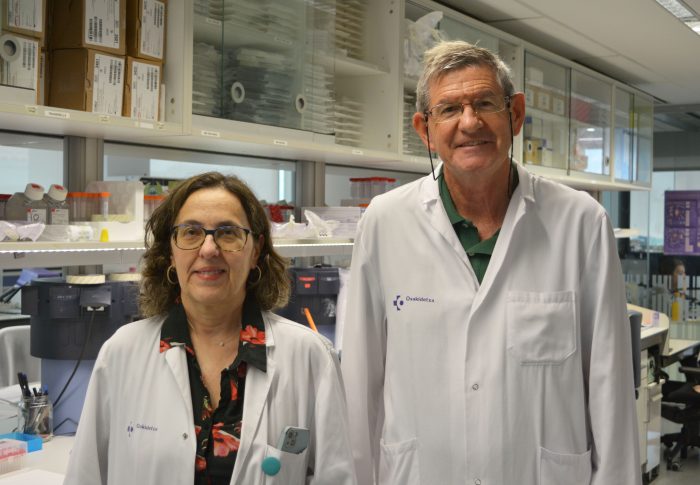
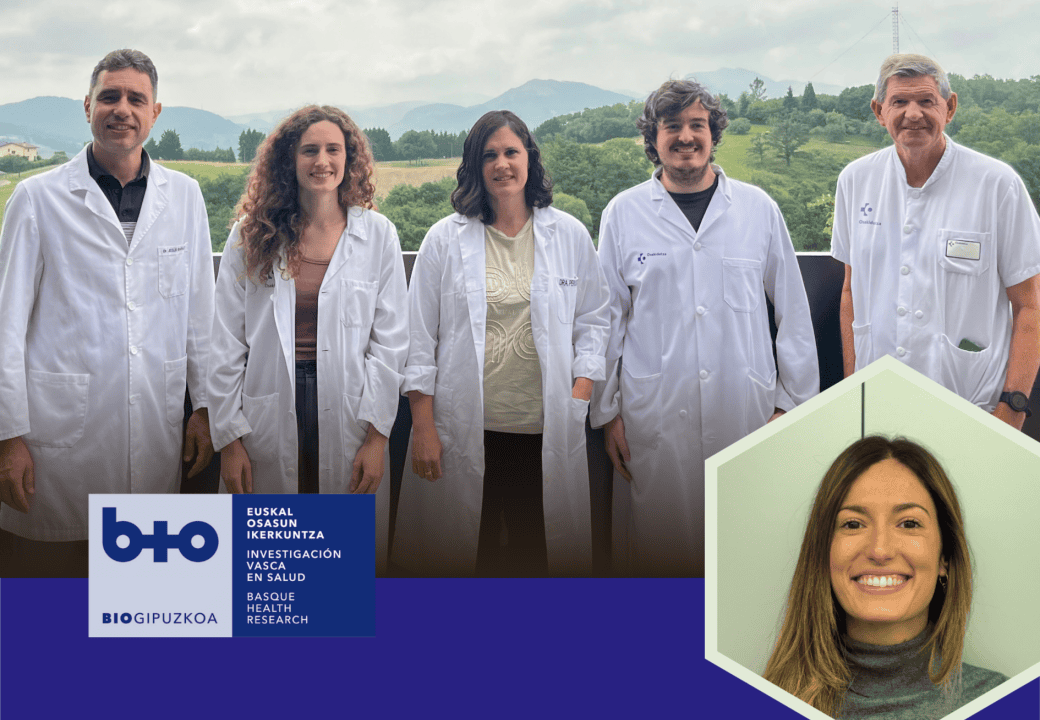
The study, whose first author is Aloña Agirre Lizaso, has been published in the prestigious journal Signal Transduction and Targeted Therapy, one of the world’s leading biomedical publications, and was co-led by Dr María Jesús Perugorria, leader of the Hepatic Immuno-oncology group of Biogipuzkoa HRI and researcher at the University of the Basque Country (EHU), and Dr Jesús M. Bañales, leader of the Liver Diseases group at the Biogipuzkoa HRI, and reasearchers of the CIBER of liver and digestive diseases. The research involved national and international groups with expertise in liver cancer, tumour immunology and tumour microenvironment biology.
The findings demonstrate that the MARCO receptor plays a key role in tumour progression, immunosuppression and tumour-associated fibrosis, opening new avenues for the development of immunotherapeutic strategies for the treatment of intrahepatic cholangiocarcinoma.
Role of MARCO in tumour-induced immunosuppression
In recent years, various studies have underscored the importance of the tumour microenvironment in the development and progression of cholangiocarcinoma. More than 60 per cent of tumours exhibit an immunologically ‘cold’ phenotype, characterised by low numbers of cytotoxic T lymphocytes and by an immune response that is insufficient to effectively eliminate the tumour.
In this context, the new study identifies the MARCO receptor as a key regulator of this immunosuppressive tumour microenvironment. The research team showed that MARCO is expressed in a specific subtype of tumour-associated macrophages, which contribute to suppress anti-tumour responses while promoting both tumour growth and tumour-associated fibrosis.
Furthermore, analyses of tumour samples from patients revealed that tumours with high MARCO expression were associated with poorer survival and a more immunosuppressive tumour microenvironment, characterised by greater T-cell dysfunction, and increased tumour-associated fibrosis.
Results obtained in preclinical models also demonstrated that the absence of MARCO protects against the development of intrahepatic cholangiocarcinoma. Animals lacking this receptor exhibited reduced fibrosis and a less immunosuppressive tumour microenvironment. They also exhibited lower levels of immunosuppressive markers on macrophages and cytotoxic T cells, resulting in improved survival and a reduction in lung metastases. Of particular significance, treatment with an antibody targeting MARCO (anti-MARCO) significantly reduced tumour volume in animal models, reinforcing the therapeutic potential of this strategy.
The results position MARCO as a promising immunotherapeutic target for the treatment of intrahepatic cholangiocarcinoma. As the researchers highlight, blocking this receptor could help to reverse tumour-induced immunosuppression and enhance the immune system’s ability to fight cancer.
The research has been funded by the Carlos III Health Institute, the Basque Government’s Department of Health, the Provincial Council of Gipuzkoa, the AECC (Spanish Association Against Cancer), Ikerbasque and CIBEREHD. The study involved researchers from Spanish institutions, including the University of the Basque Country (UPV/EHU) and the University of Salamanca, as part of CIBEREHD, as well as from international institutions, including the Medical University of Vienna (Vienna, Austria), Vrije Universiteit Amsterdam (Amsterdam, Netherlands) and Mayo Clinic (Rochester, USA). The study also benefited from the collaboration of researchers participating in the European Histological Registry of CCA.
Bibliographic reference:
Agirre-Lizaso A, Huici-Izagirre M, O’Rourke CJ, Zhuravleva E, Carpino G, Overi D, Urretabizkaia-Garmendia J, et al. MARCO promotes cholangiocarcinogenesis by inducing immunosuppression and its targeting reduces tumor growth. Signal Transduct Target Ther. 2026 Apr 29;11(1):158. doi: 10.1038/s41392-026-02657-w.