
Over the next two years, the samples needed to make progress in research will be collected at the Donostia University Hospital, and will be processed and stored at the Biodonostia Institute. The study shall be conducted by a consortium of researches from the United States, Argentina, United Kingdom, Germany and the government, in this case through the Multiple Sclerosis Unit at the Biodonostia Institute.
For many years, we have been aware of the influence of diet and our stomach on our body’s well-being, but it was not until the last decade that we began studying the composition of the microorganisms in our digestive system in depth (what we call intestinal microbiota), without which we would be unable to live. The combination of the hundreds of species making up our microbiota is different for each individual. Several studies have associated this composition with different diseases, though it is still unclear if this is the cause or consequence of them.
Microbiota has a relationship with our immune system, regulating it, and therefore influencing its status. This leads one to believe that autoimmune diseases may be affected by microbiota.
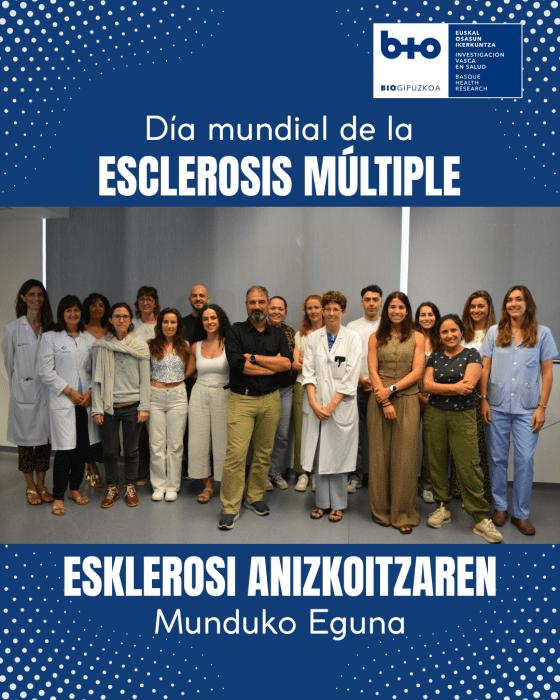
Of autoimmune diseases, the most influential and serious is multiple sclerosis. This disease affects 2.5 million people worldwide, 40,000 of which are in this country, and around 2,000 in the Basque Country. Despite huge progress made in research over the past few decades, we still do not know certain aspects of the disease, such as the relationship between microbiota and the disease.
To this end, an international consortium was created to study microbiota in multiple sclerosis. BIODONOSTIA/OSI participates in IMSMS (www.imsms.org), with the aim of collecting the necessary information on microbiota genetics and the patients’ eating habits. The intent is to collect samples of the faeces and blood of multiple sclerosis patients, as well as samples of a healthy individual living with the patient. The consortium’s challenge is to collect 4,000 patient samples. This number will facilitate a comprehensive approach which, on one hand, will provide understanding of the relationship between the microbiota and the disease, and on the other, for detection of protective, neutral or high-risk species of microbiota.
The Multiple Sclerosis Unit at the Biodonostia Institute, which has been researching the causes and operation of multiple sclerosis for over ten years, has stated the importance of obtaining the samples necessary for the research to move forward, since this is the only research group in the country performing this kind of analysis.
Over the next two years, samples will be collected at the Donostia University Hospital. Since January of 2017, 12 individuals were already recruited for this purpose. The samples will be processed and stored at the Biodonostia Institute. Moreover, pilot studies shall also be conducted in coordination with the consortium during this period, in order to answer some of the questions regarding this complex, fascinating subject.
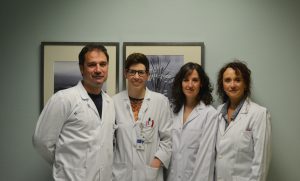
The Biodonostia Institute node is led by Dr Tamara Castillo and Dr David Otaegui, and coordinated by Dr Maider Muñoz-Culla e Itziar Lopetegi.