 ALS is an enormously heterogeneous disease in regard to the progression rate of its symptoms and survival time, and there are no tools to predict these clinical variables. However, an early prognosis on development of the disease could enable neurologists to anticipate decisions which favour the patient’s quality of life and to more precisely assess new treatments in clinical trials.
Cooperation between basic and clinical research is therefore necessary in order to improve knowledge of the causes of this disease and to develop new therapeutic strategies capable of slowing or stopping its progression.
Biodonostia, the Osakidetza Research Institute in Gipuzkoa, coordinates a cooperative project focussed on finding metabolic biomarkers in ALS patients. The basis of its work is the increasingly widely accepted premise among specialists that ALS patients present metabolic disorders associated to the disease which should leave a metabolic footprint in blood.
Until now, more than 50 patients have been recruited for the study from all over the Basque Country, mainly from the Donostia University Hospital and the Araba University Hospital, as well as patients from Cantabria through the Marqués de Valdecilla University Hospital, all of whom have been clinically monitored for more than two years. The analyses obtained to date, with collaboration of the Physiology Department at the University of the Basque Country (EHU/UPV) and the company OWL Metabolomics, have resulted in the discovery of a blood biomarker related to the metabolism of fats, which is capable of powerfully predicting the progression and survival rate of the disease.
This project corresponds to the strategic initiatives in biosciences-healthcare carried out in the framework of the RIS 3Smart Specialisation Strategy.
On the other hand, Biodonostia coordinates a cooperative project of drug discovery for treating ALS. Given the low success of current treatments (Riluzole and Edavarone), which do very little to stop the disease from advancing, this study aims to unravel potential mechanisms on the origin of the disease underlying metabolic disorders and therefore to propose therapeutic targets and test therapies in experimental disease models.
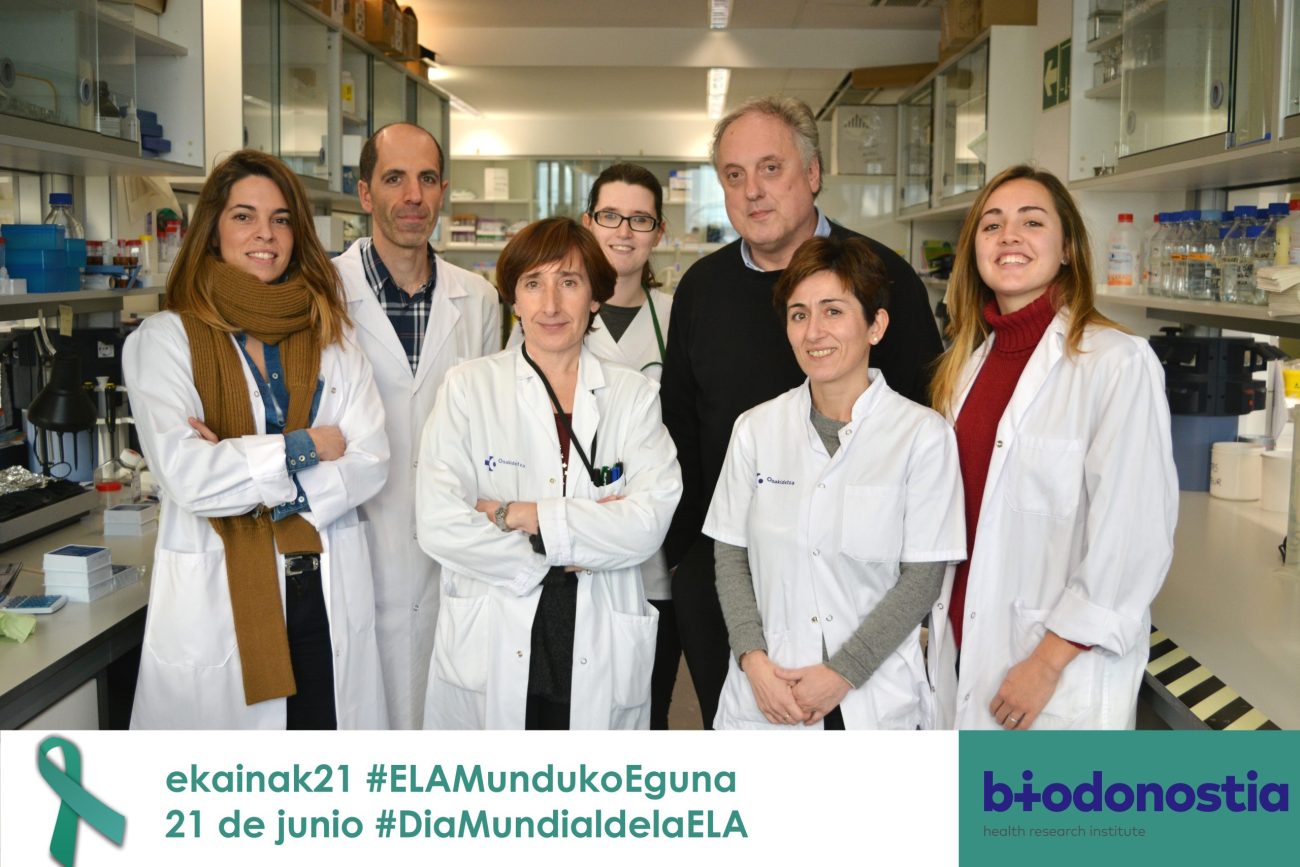
Coordinated by the neurologist Adolfo López de Munain and the researcher Francisco Javier Gil-Bea from the Biodonostia Institute and Donostia University Hospital, the project has a multidisciplinary team of neurologists who specialise in ALS and basic researchers from different fields belonging to various CIBERNED (Spanish Network Center for Biomedical Research in Neurodegenerative Diseases) groups and centres.
Today a series of promising results have been obtained, revealing an altered mechanism in the mitochondrion which seems to explain the metabolic defects of ALS, and will enable the development of innovative molecules for this target. This said, these results are still in their early days, meaning that constant work on this subject must continue.
It is also worth noting that the Basque health system is backed by the Basque Biobank, managed by BIOEF, a tool for managing the biological samples generated during routine care for research purposes. This Biobank collects, processes and stores these samples for projects carried out anywhere in the world and that meet ethical and scientific quality standards. In the sphere of neurodegenerative diseases and specifically Amyotrophic Lateral Sclerosis, the Basque Biobank has a brain donation programme which has the participation of neurologists, pathologists and other medical specialists. The Basque Biobank stores blood samples taken from 363 patients with Amyotrophic Lateral Sclerosis, who also donated their brains thanks to the brain donation programme in 95 cases.