
Glioblastoma multiforme is the most common type of brain cancer and one of the most malignant of all existing cancers. The poor prognosis of patients affected by this cancer is largely a result of its resistance to currently existing chemo and radiotherapy treatments.
In recent years this resistance has been described as being due to the existence of a cell subpopulation, going by the name of tumor stem cell. The results of a study coordinated by Dr Ander Matheu, head of the Cellular Oncology Research Group at the Biodonostia Health Research Institute (Biodonostia HRI) take yet another step forward in identifying key mechanisms in the biology of tumor stem cells.
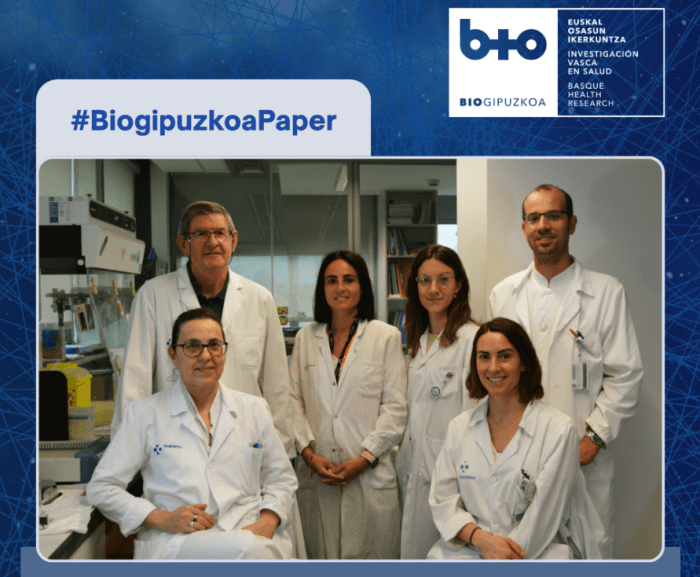
Researchers in the study, which also saw the participation of Doctors Nicolás Samprón and Irune Ruiz (Donostialdea IHO), Jorge Villanúa (Donostia Unit, OSATEK) in addition to researchers at The Francis Crick Institute in London (Dr. Lovell-Badge) and the MRC Centre for Regenerative Medicine in Edinburgh (Dr. Steven Pollard), identified that tumor stem cells require the activity of genes SOX2 and SOX9 to maintain their tumor capacity and lend resistance to temozolomide, a chemotherapy agent regularly used in clinical practice to combat glioblastoma.
The results of the work reveal that the gene silencing of SOX2 or SOX9 eliminates the typical characteristics of tumor stem cells, making them sensitive to temozolomide. These data provide a mechanism for explaining the causes of chemoresistance and identify key targets for avoiding the recurrence of glioblastoma.
This information, generated by the first authors of the work, Laura Garrós and Paula Aldaz raised the matter among members of the consortium of the search for agents to pharmacologically inhibit the expression of these SOX proteins. After successive attempts, Olatz Arrizabalaga identified that rapamycin (mTOR inhibitor and antitumor agent undergoing tests in different glioblastoma clinical trials) very significantly silence SOX2 and SOX9 levels. She also noted that the hypothesis of inactivating tumor stem cells by inhibiting SOX proteins was correct, given that combined treatment with temozolomide and rapamycin caused very significant delay in the formation of glioblastoma, being more efficient in cells with high endogenous levels of SOX proteins than in those with low expression.
These results come from preclinical studies to postulate that incorporating rapamycin to conventional treatment could be an effective therapy in patients with glioblastoma whose biopsies express high SOX2/SOX9.
The research work appears in an article published by the Expert Opinion on Therapeutic Targets journal, in its online edition.
mTOR inhibition decreases SOX2-SOX9 mediated glioma stem cell activity and temozolomide resistance.