
Currently, 3D bio-printing provides for experimental development of prostheses and tissues, in order to substitute or replace diseased organs, and the functional aftereffects that affect them after certain treatments.
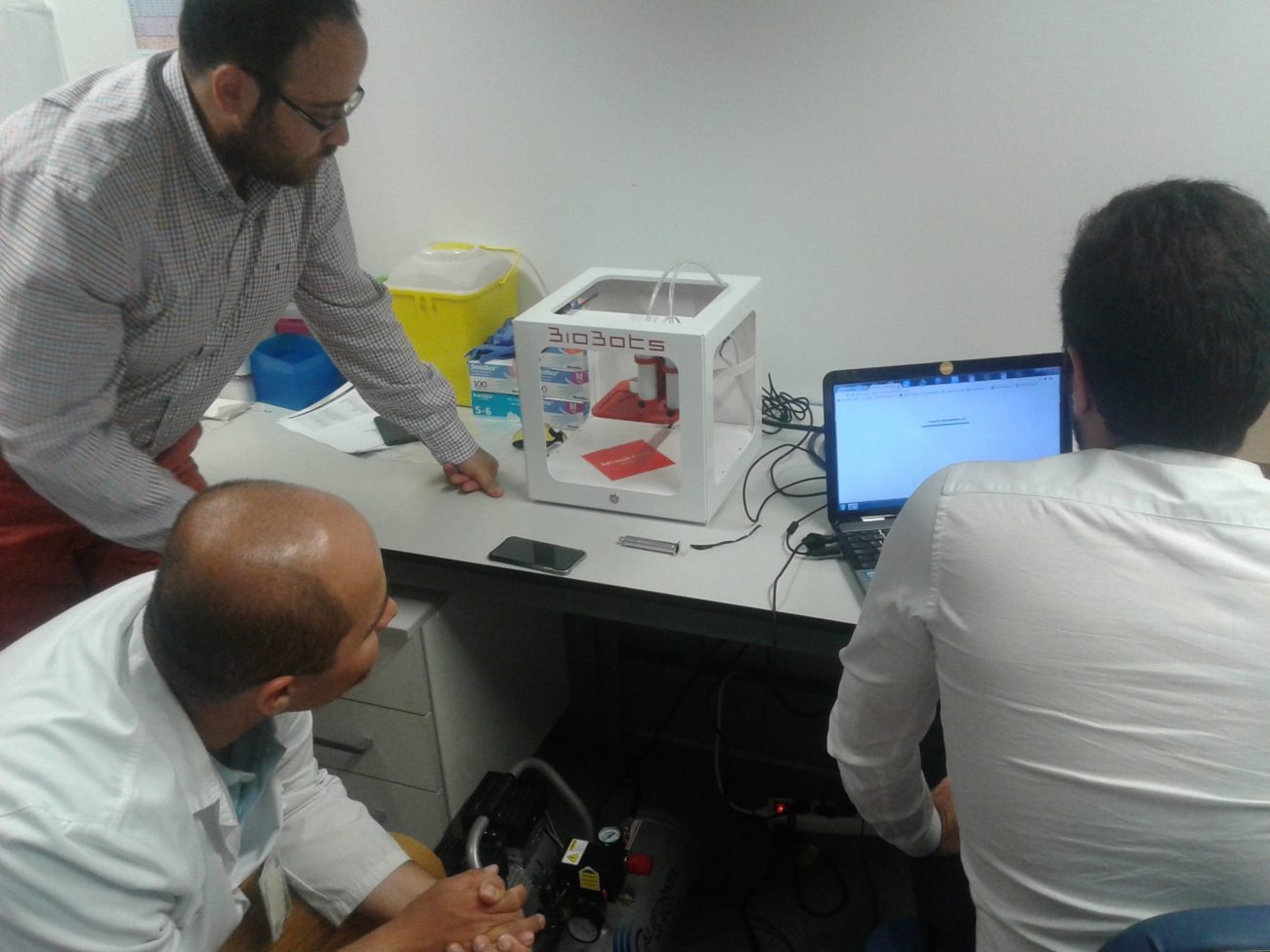
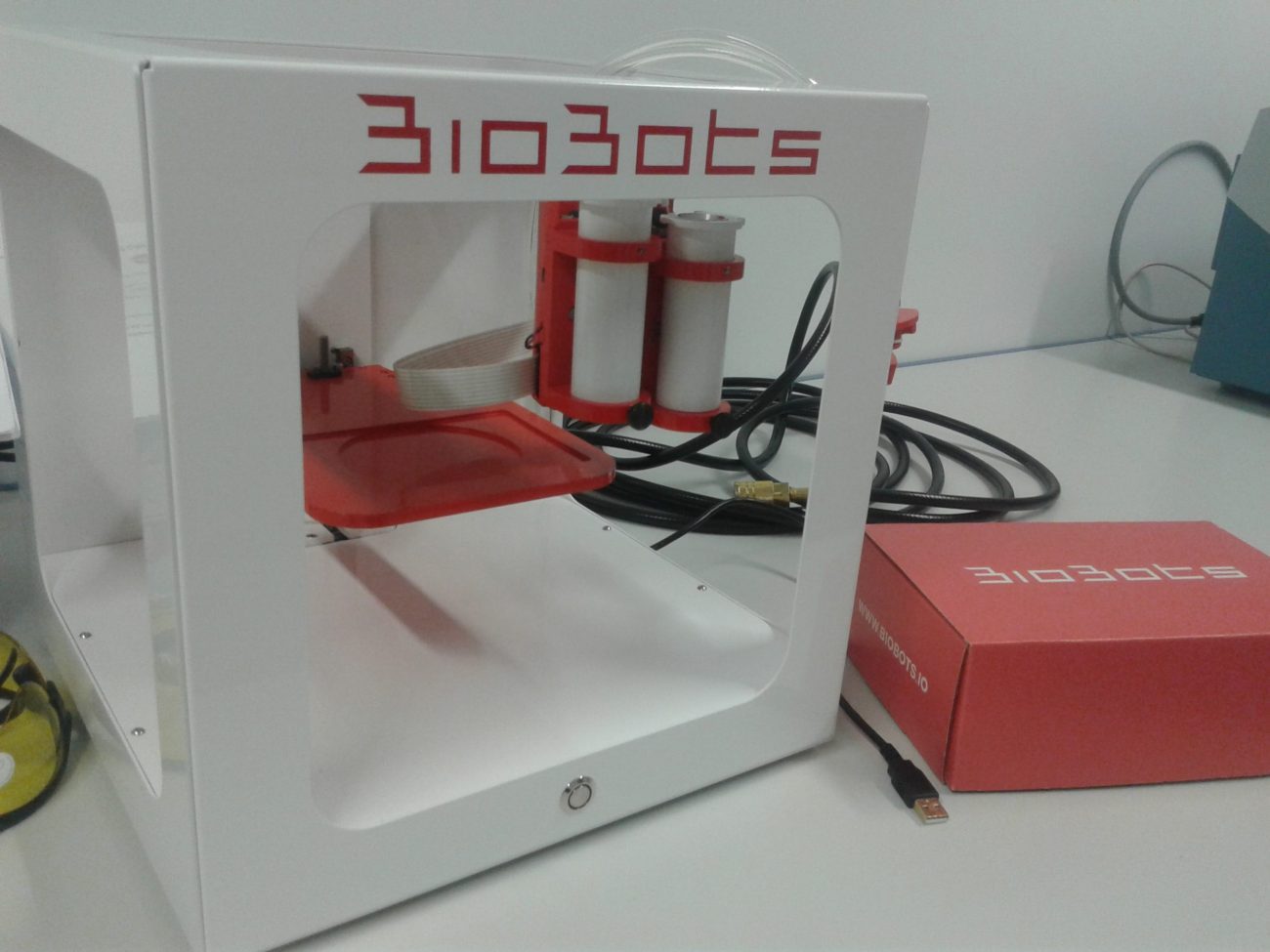
Since July, IIS Biodonostia has had 3D bio-printing equipment, with which it will work on nasal septum alterations and eardrum perforations secondary to middle ear problems. Under the supervision of project head Dr Carlos Miguel Chiesa Estomba, Otolaryngology Service Doctor at OSI Donostialdea, and with the collaboration of the Cell Culture Platform of IIS Biodonostia and DqBito Biomedical Engineering, the project is attempting to develop septal cartilage and eardrum tissue with these new technologies.
Septal perforation bears on the communication between both nostrils due to a defect in the nasal septum. Surgery to close a septal perforation is not an easy procedure, and is currently one of the great challenges in otolaryngology. Different techniques have been used, including using temporary muscle fascia, cartilage or rib perichondrium, ear cartilage, or fascia lata, all accompanied by complications and both functional and aesthetic aftereffects, with success rates between 50% and 70%.
Regarding the closure of eardrum perforations, different graft techniques have also been used, with success rates around 70%, although just as mentioned above, they are also accompanied by aesthetic aftereffects. The surgical procedures used for both of these cases require an operating room, and most of them are performed under general anaesthesia, requiring 24-48 hours of hospitalisation when there is favourable evolution.
With the new printer, located at the Biodonostia Cell Culture Platform, with 3D bio-printing, different biocompatible structures will be designed which, along with bone cells, will be inserted into animals, both for the development of septal cartilage and eardrum tissue.
In the future, the results obtained from this experimental development could be transferred to patients with this pathology, in an attempt to decrease the great functional and aesthetic aftereffects caused by the techniques currently used, as well as the average time needed for operations, the need for anaesthesia and the healthcare costs associated with traditional operations.
This project, which implies the incorporation of the 3D bio-printer, was made possible with bottom-up projects promoted by OSI Donostialdea, whose philosophy is to generate knowledge and promote innovation in healthcare organisations.