
A new European Union funded research project aims to improve care for older people by using artificial intelligence (AI) to predict their care needs. By collecting data from individuals in their homes, the project will enable the early detection of health issues, allowing for swift interventions that reduce hospital admissions, relieve pressure on both patients and healthcare staff, and prevent costly emergency care and aftercare. This project will be lead in our Institute by Merisa Merino, group leader of Economic Evaluation of Chronic Diseases.
In this new research project, a team of researchers from Sweden, Norway, and Spain will use AI to enhance care for older individuals by identifying early signs of health problems. They will achieve this through wearable technology that collects real-time data within the home environment.
The project aims to improve the health and well-being of older people by detecting early health issues and alerting healthcare professionals for prompt interventions, thereby reducing the severity of illnesses. That is, to detect care needs before they occur.
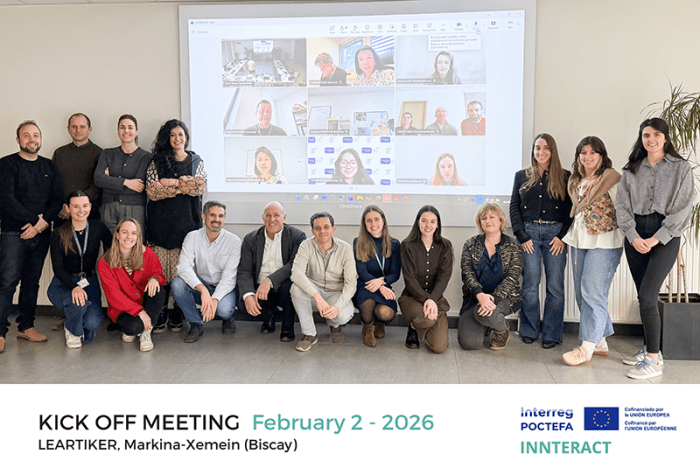
The project is a collaboration between researchers at the University of Skövde (Sweden), the Norwegian University of Science and Technology (NTNU), and the Biogipuzkoa Health Research Institute and Mondragon University in Spain.
The project team will work interdisciplinarily, with each member bringing their expertise. The Spanish team will lead the effort to collect patient data from the three countries and evaluate the impact of the developed AI solution, while the Norwegian team will be responsible for developing and training the AI algorithms and overseeing the project’s progress. The Swedish team is responsible for the implementation of the AI solution. This involves, among other things, analysing how the solution can best become part of healthcare staff workflows and developing concrete recommendations for its use. The goal is to create a more proactive approach in healthcare, allowing patients to actively participate in their own care. The team is also responsible for disseminating the research findings to support broader adoption.
The project is expected to last for three years, starting in November 2024, and is funded by the EU Commission, Forte, Forskningsrådet, and Departamento de Salud Gobierno Vasco.